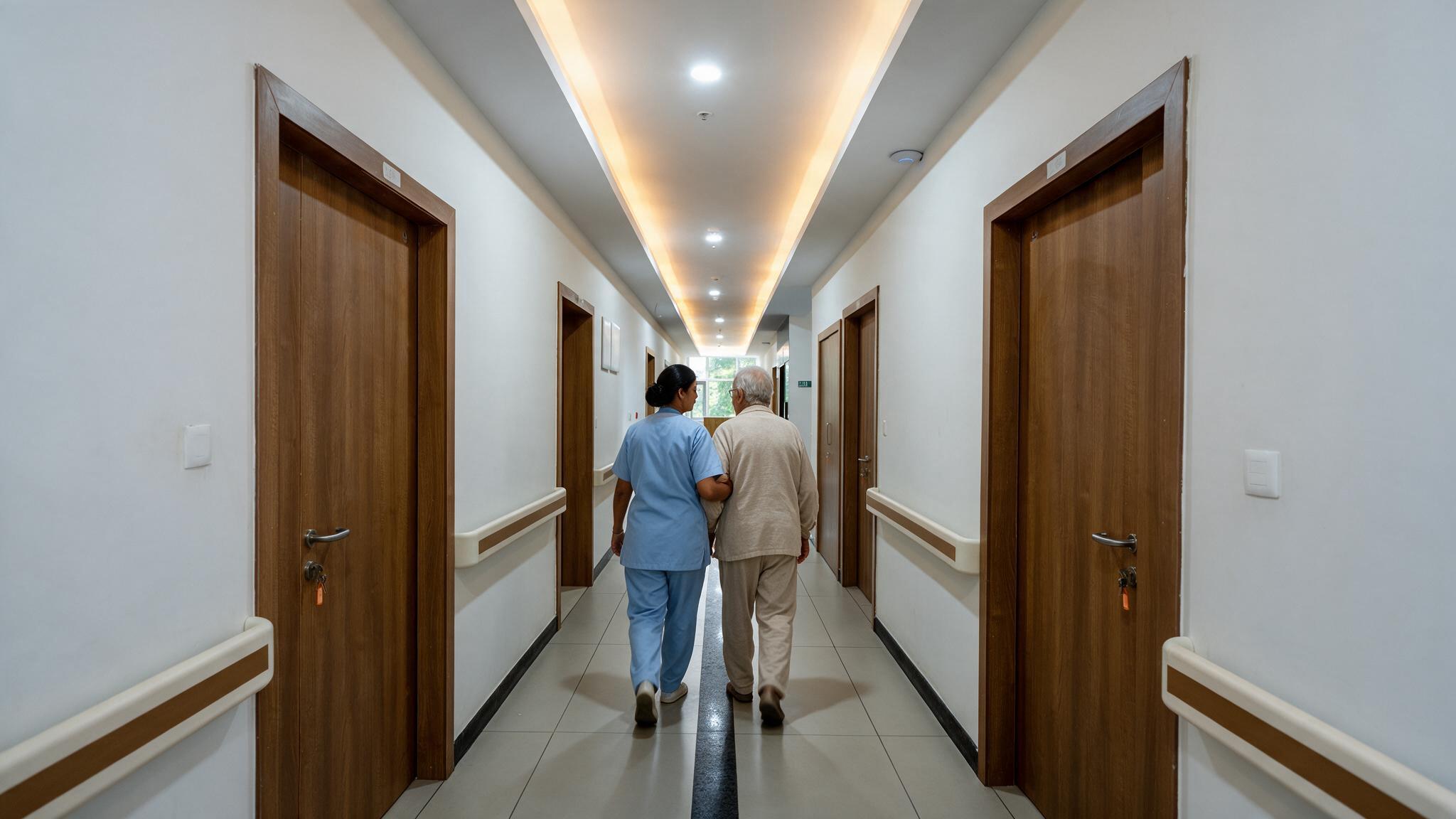
We ask every family who is looking after whom, and the honest answer is often that one person — usually a daughter, a daughter-in-law, or a spouse themselves in their seventies — is carrying almost all of it alone. Caregiver exhaustion is not a footnote to elderly care. It is a clinical risk factor for the person being cared for.
The signs families miss in themselves
Caregivers are usually very good at noticing decline in the person they look after, and much worse at noticing it in themselves. Constant fatigue, irritability that feels unfamiliar, skipped medical checkups of their own, and a sense of being permanently "on call" are all signs worth taking seriously rather than pushing through.
Why it matters clinically, not just personally
An exhausted caregiver reacts slower to a change in condition, is more likely to miss a medication dose or a subtle symptom, and — eventually — is at risk of becoming a second patient rather than a support. Respite care exists precisely to interrupt that pattern before it gets there.

What a respite stay actually looks like
A respite stay is a short, planned residential stay — typically ranging from a few days to a few weeks — during which the resident receives the same 24×7 supervision, medication management and daily support as any other resident. It is not a downgrade in care; it is the same care, on a temporary basis, so a caregiver can travel, rest, or simply recover.
How families use it
- Planned relief around travel, a family event, or a caregiver's own medical procedure
- A short trial before a longer-term decision is made
- Extra support during a caregiver's own illness or recovery
- A regular, scheduled break — some families build this in every few months, before exhaustion sets in
The families who use respite care well don't wait until they're at breaking point. They book it the way they'd book anything else that needs planning ahead.
If you're the one holding everything together right now, a short respite stay is worth considering long before it feels like an emergency.