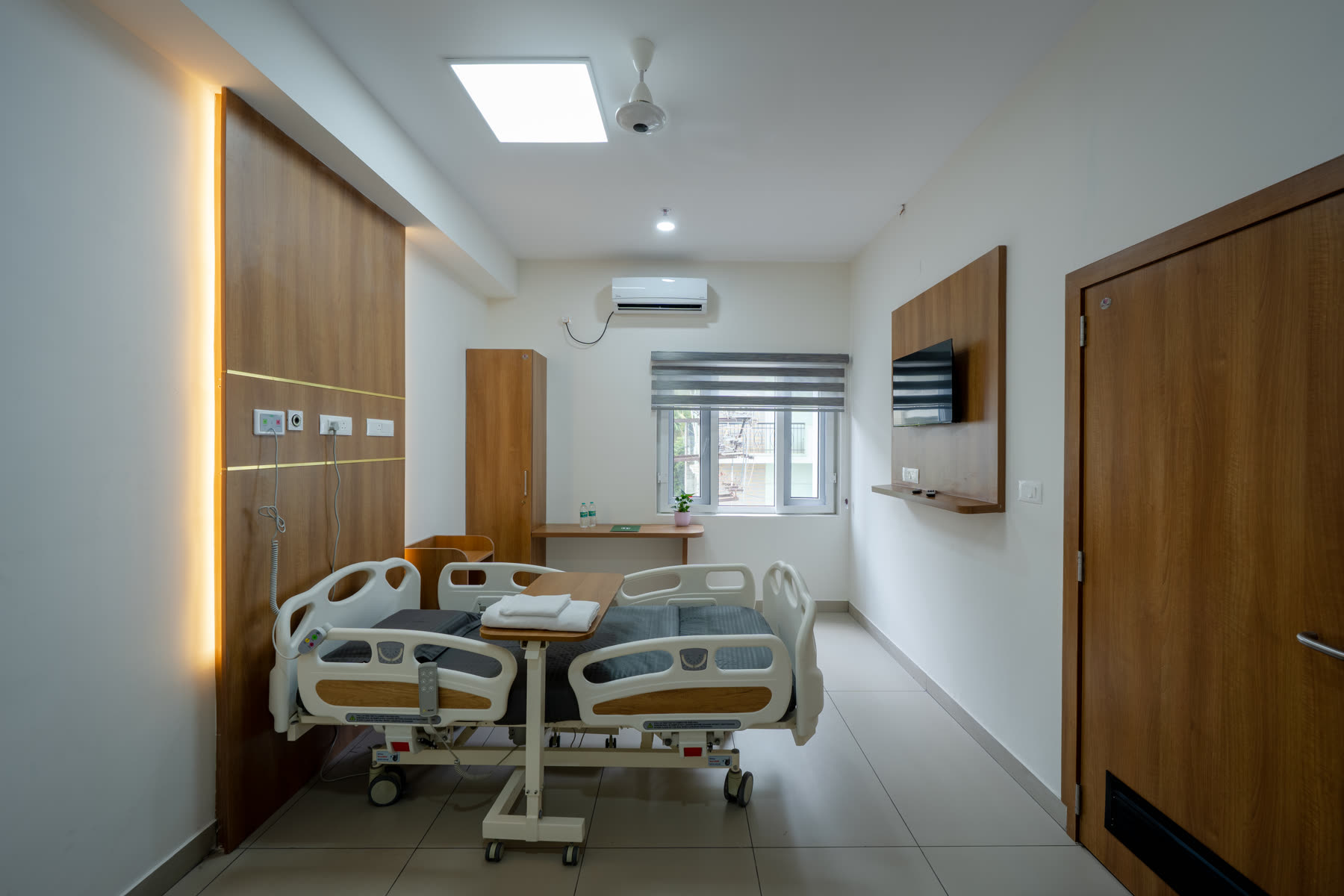
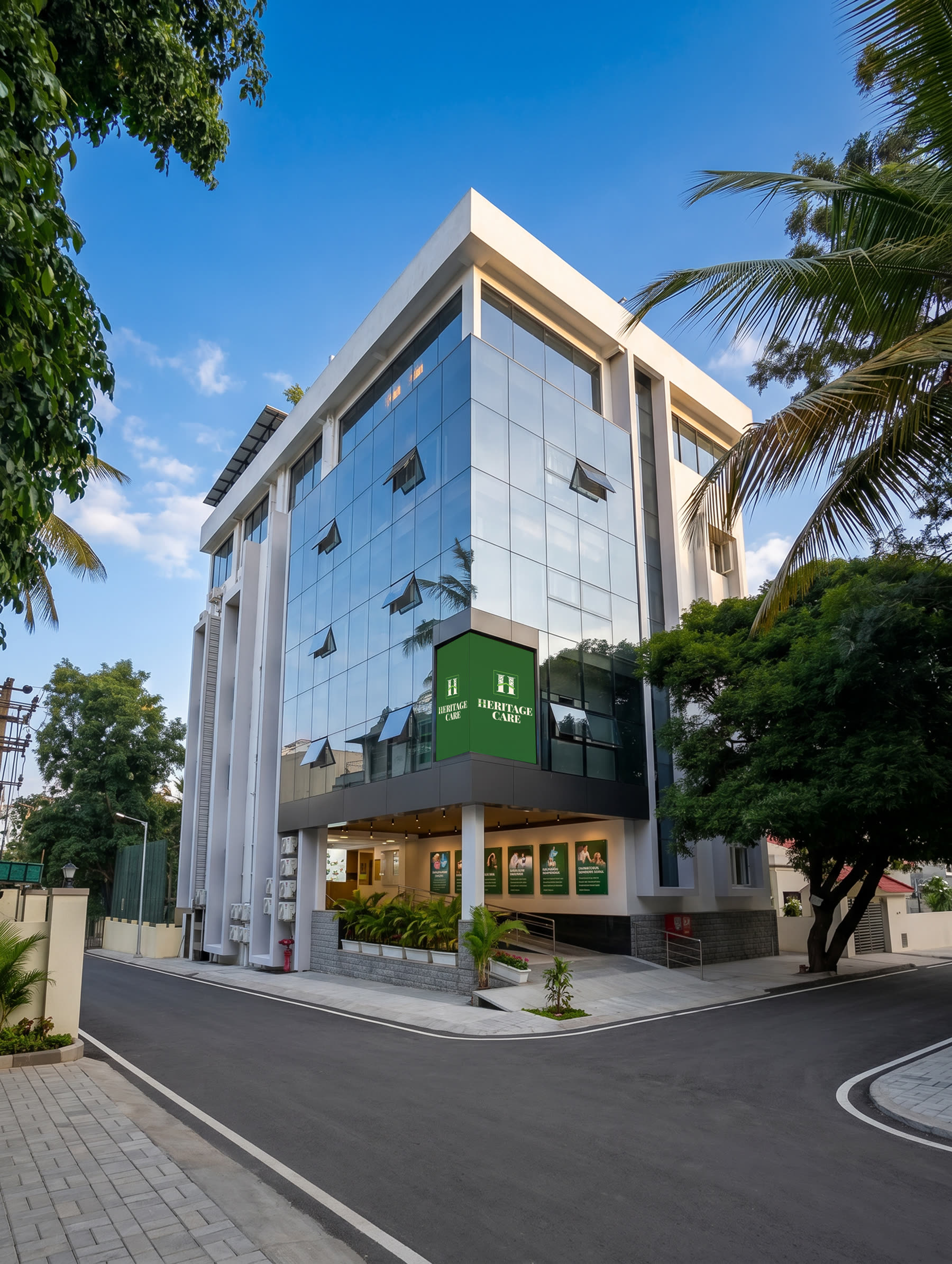
Most residential care in Indian cities operates out of converted homes. Converted homes have narrow staircases, raised thresholds, and bathrooms designed for one able-bodied adult. Heritage Care was built, from the ground up, for elderly and recovering residents — and almost every decision in the building exists to remove a daily risk.
Step-free from gate to bed
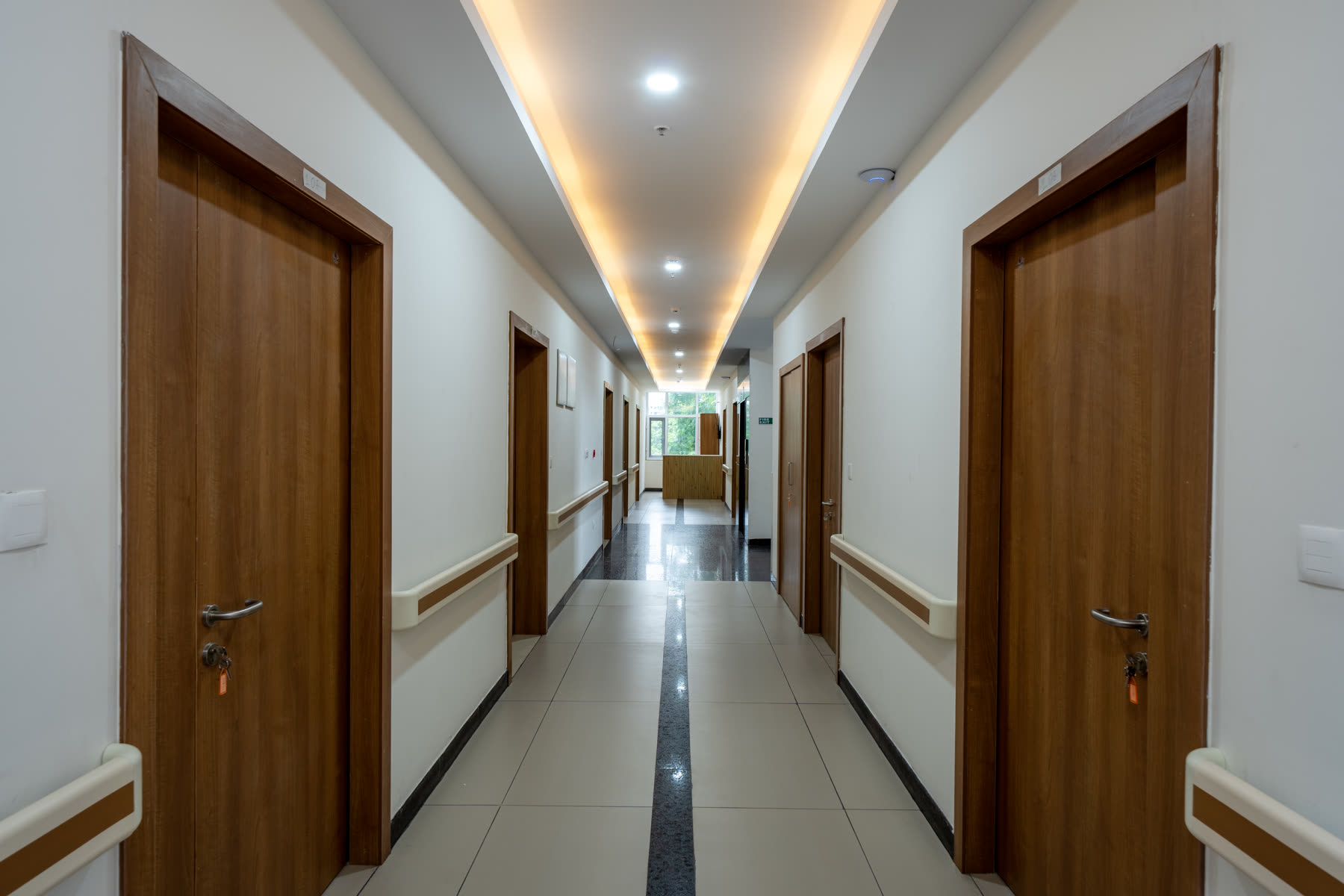
Corridors are wide enough for a walker and an attendant side by side, thresholds are level, and there is continuous handrail support. Nothing about that is decorative: the majority of falls in care settings happen on routine journeys between a bed and a bathroom.
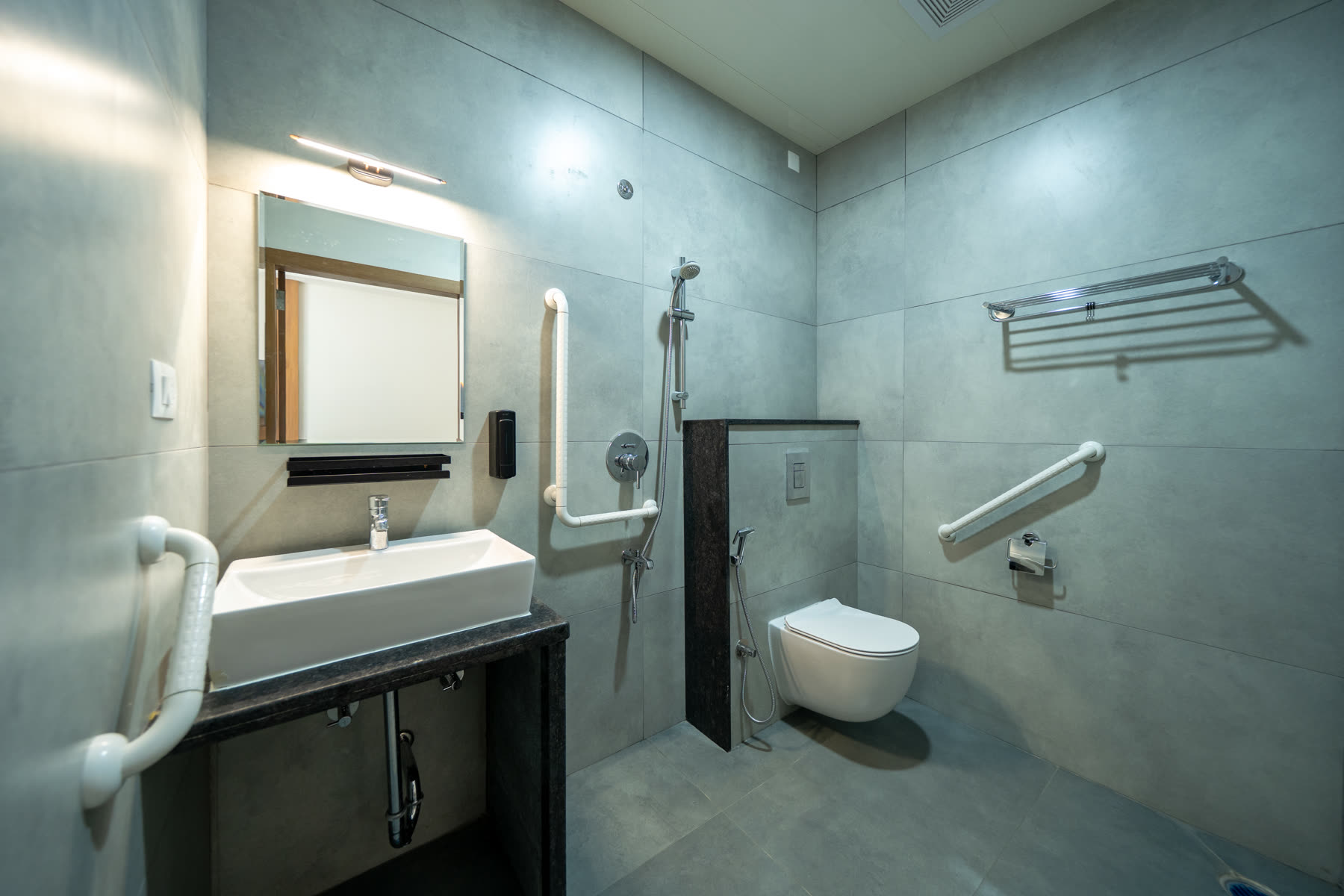
Bathrooms built for assistance
Grab rails, level-entry showers, non-slip flooring and enough turning space for a wheelchair with a carer present. Dignity in elderly care is mostly a bathroom design problem.
Therapy under the same roof
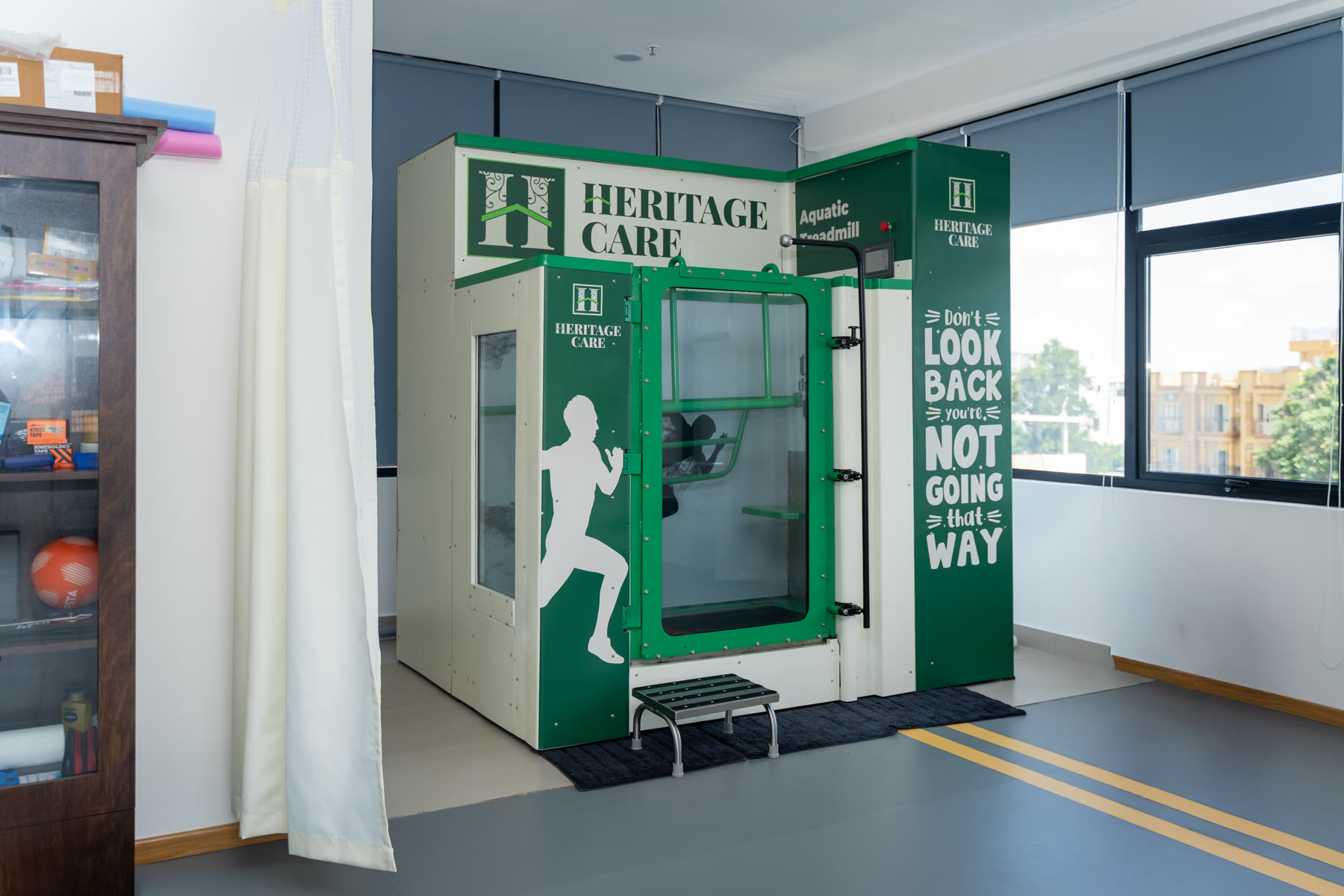
A physiotherapy gym and an aquatic therapy pool sit within the building, which means therapy happens daily instead of depending on a car, a driver and Bangalore traffic. For post-surgical residents this single fact often decides how quickly they walk again.
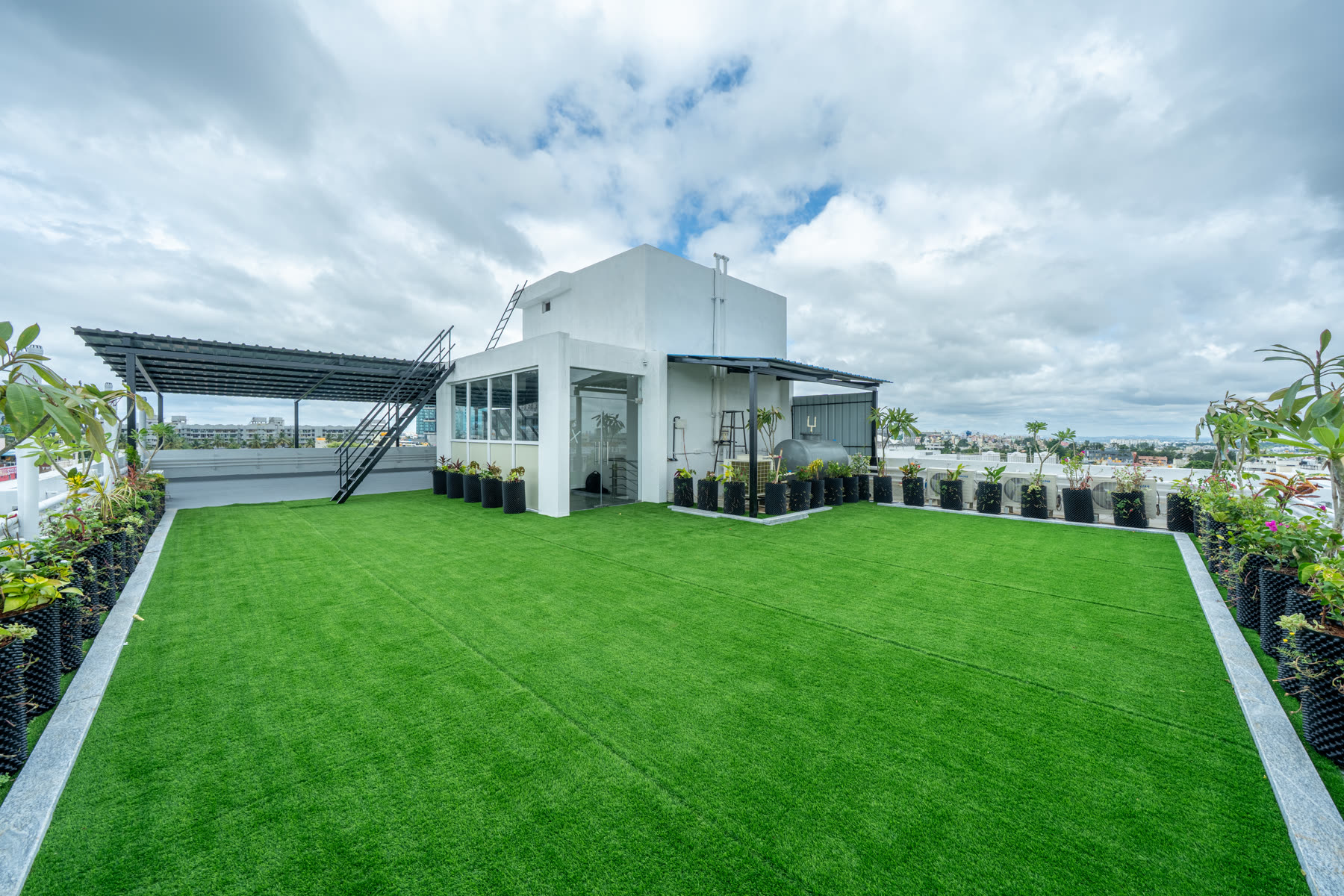
Somewhere to be outside
The sky garden exists because residents who spend time outdoors sleep better, eat better and are less likely to become withdrawn. It is also where most families choose to sit when they visit.
We are off Kanakapura Main Road in South Bangalore, and we would rather families visit before they need us. Walking a building tells you more than any brochure.