
Families visiting facilities for a loved one with dementia are usually looking at the wrong things first — the lobby, the furniture, how new the building looks. The details that actually matter for a resident living with memory loss are quieter, and worth knowing before you visit.
Routine and structure, visible in the day
Consistent daily routines reduce anxiety, confusion and agitation for residents with dementia far more than any single feature of the building. Ask what a typical day actually looks like, hour by hour, rather than accepting a general description of "structured care".
Safety that doesn't feel like a hospital
Round-the-clock security staff and CCTV matter for residents prone to wandering or disorientation — but the best facilities build this in without the space feeling clinical or confining. Calm, low-stimulation common areas do more for a resident's wellbeing than visible security ever will.
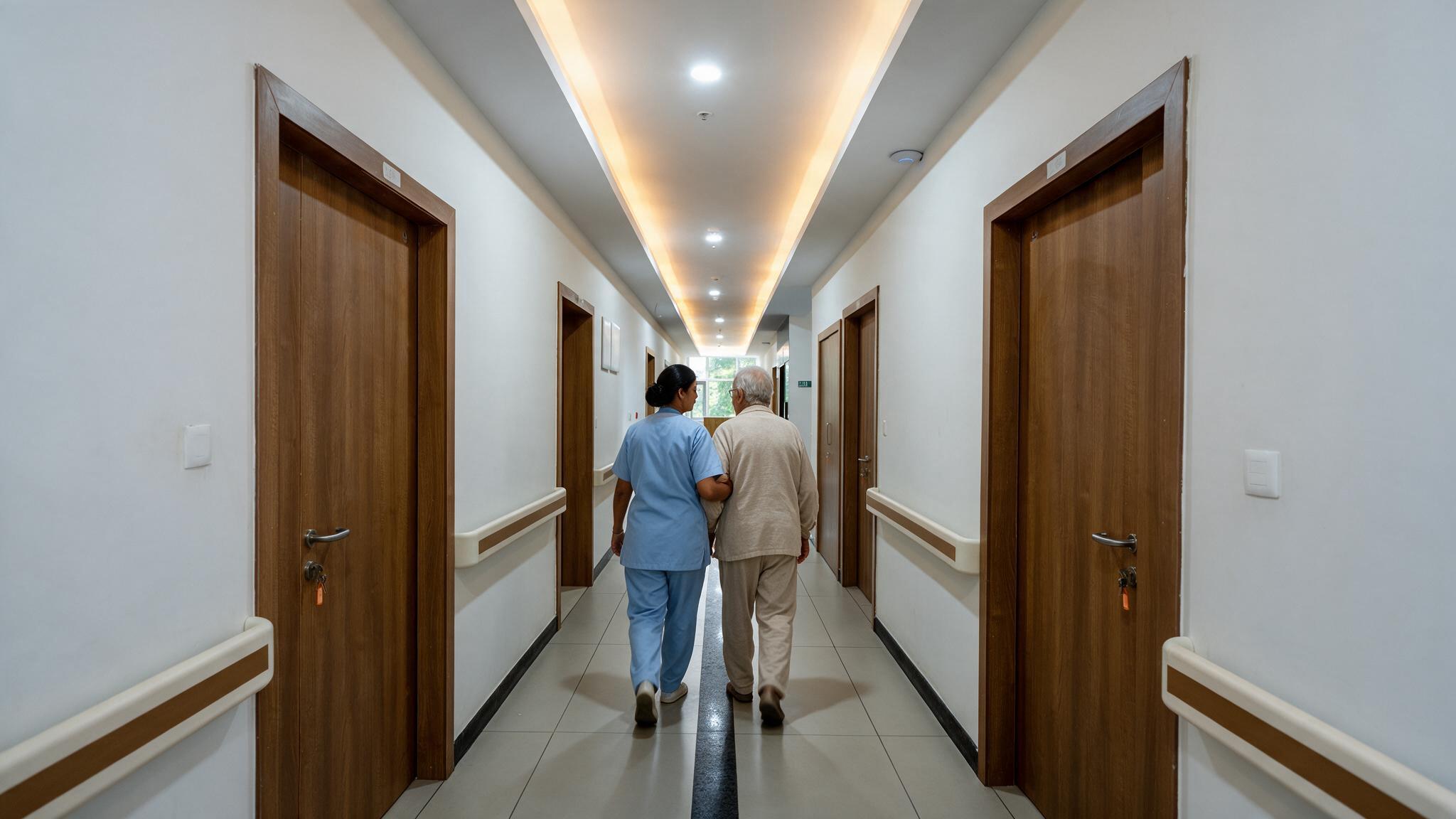
Physical design cues worth checking
- Handrails and fall-risk fittings throughout, not just in bathrooms
- Clear sightlines so residents don't feel lost navigating between rooms
- Wheelchair-accessible bathrooms with grab rails and level-entry showers
- Quiet, low-stimulation spaces alongside communal areas
- Outdoor or garden access, since time outside measurably improves sleep and mood
Staff who are trained for behavioural change, not just tasks
Ask how staff are trained to respond to confusion, agitation or repeated questions. The honest answer should involve patience, calm and consistent communication — not a generic assurance that "we're used to it."
Family involvement, not just visiting hours
The best memory care settings actively involve families in care planning, not just permit visits. Ask how often you'll hear from the care team, and in what form.
Dignity in memory care is mostly about routine, patience and physical design working together quietly in the background — not one dramatic feature you can point to on a tour.
Our memory and dementia care programme is built around exactly these details — structured routines, a secure but calm environment, and a care team trained specifically for behavioural change. We're happy to walk you through a typical day before you decide.


